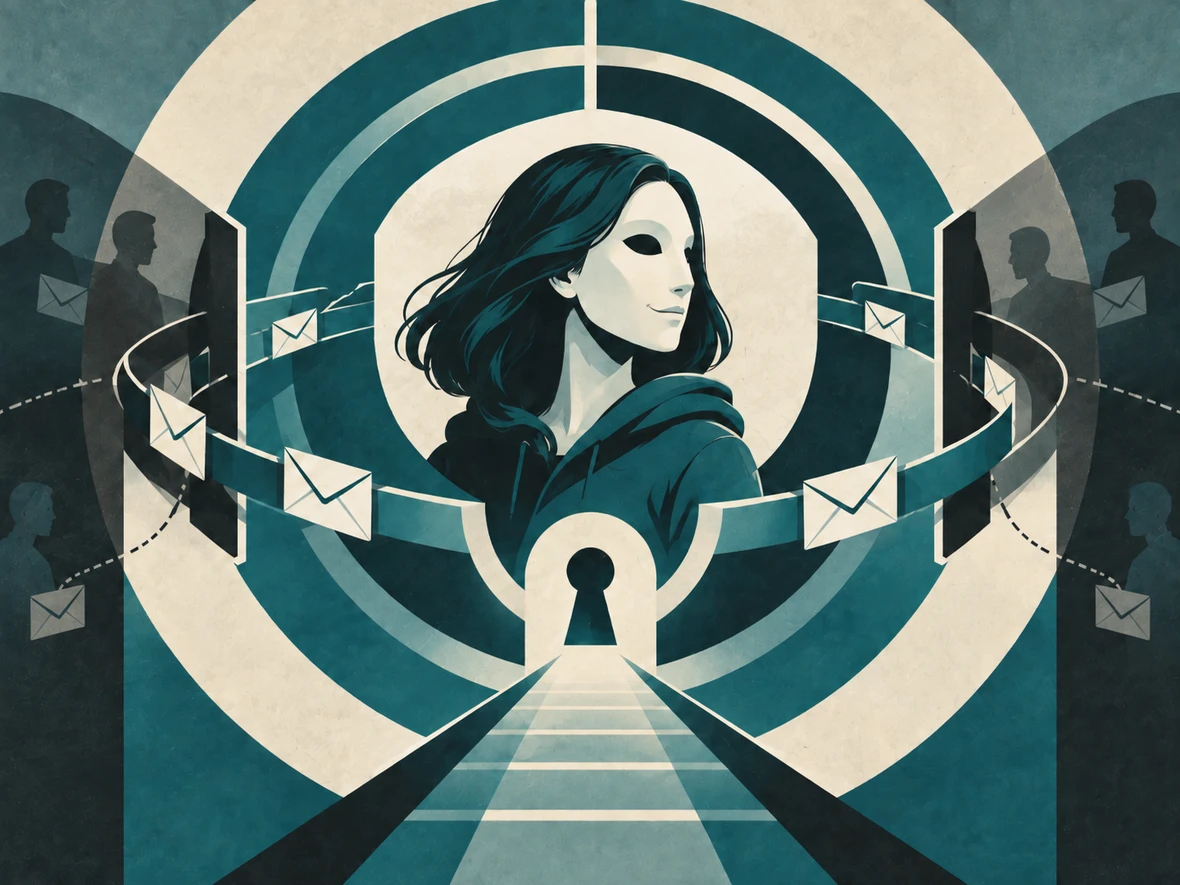
Disclaimer: Mara Klein is a fictional representative character and the story is fictional. Though, some people may argue it isn’t.
At 7:42 on a Tuesday morning, Mara Klein learned that her company was entering a period of strategic focus.
Nobody knew what that meant.
The CEO, however, had placed it in a slide between Operational Excellence and Building for the Future, so it clearly meant something.
Three people from Product disappeared by Thursday.
Mara worked in marketing operations, which meant she could explain what the company sold, how the CRM was misconfigured, why three dashboards disagreed with each other, and which spreadsheet must never be deleted despite being called final_v2_REAL_USE_THIS.xlsx.
She had six years of experience.
Until recently, this had seemed like quite a lot.
Then she started reading job advertisements.
One company wanted a Marketing Operations Associate with five years of experience in Salesforce, HubSpot, SQL, Python, attribution modeling, generative AI, enterprise procurement, stakeholder management and “executive presence.”
Associate.
Another wanted somebody “early in their career” with “a proven history of leading cross-functional transformation at scale.”
Mara stared at that sentence for some time.
Apparently early careers had become much more productive while she was at lunch.
The World Economic Forum had found that employers expected 39 percent of workers’ core skills to change by 2030.¹ Mara had no objection to learning. She liked learning. The difficulty was that learning had somehow stopped being an activity and become a subscription model.
She had certificates in analytics, automation, project management and AI fundamentals. She was halfway through another course because one vacancy listed a tool she had never encountered, and by now she reacted to unfamiliar software logos the way earlier generations reacted to smoke on the horizon.
Acquire certificate first.
Ask questions later.
A 2025 study based on roughly eleven million UK vacancies had found something stranger still: in AI-related jobs, formal degree requirements were actually falling while individual technical skills were becoming more valuable.² This sounded encouraging until Mara realized what it meant in practice.
You no longer necessarily needed another degree.
You merely needed seventeen other things.
So Mara upgraded.
Then she applied.
Applying, in 2026, was an interesting ritual in which a company placed a résumé-upload button immediately above a form requiring the applicant to type the résumé back in manually.
Mara accepted this because civilization had apparently reached broad agreement that computers could generate videos from sentences but remained unable to move “Senior Marketing Analyst” from one rectangle into another.
For every promising role, she made a fresh version of her CV.
She moved Analytics upward.
She moved Leadership downward.
She changed managed to led, then led to owned, because a career coach on the internet had warned her that managed sounded passive.
She removed an older internship because it revealed that she had once existed before 2020.
She added the phrase “AI-enabled workflow optimization.”
She deleted it because it sounded unbearable.
She added it again because the job description contained it twice.
Then came the cover letter.
The company wanted to know why she was passionate about its mission.
Mara had discovered the company eleven minutes earlier.
Its mission was to provide cloud-based workflow orchestration for mid-market service organizations.
She opened a blank document.
Dear Hiring Team,
She stopped.
It seemed unfair to begin a relationship with dishonesty this early.
Forty-three minutes later, she had produced 387 words explaining why cloud-based workflow orchestration had always occupied a special place in her heart.
She attached the application.
The company sent an automatic email thanking her for the enormous care she had taken.
Then nothing happened.
This was not unusual.
In a 2025 German survey by Stepstone, 64 percent of job seekers said they had experienced an employer disappearing after an application; 44 percent said the disappearance happened immediately after they submitted their documents.³ An Indeed survey published in Germany in 2026 similarly found that 63.5 percent of respondents had received no response to at least one application during the previous twelve months.⁴
Mara did not know these numbers yet.
She believed she was personally doing something wrong.
This was worse.
So she improved the résumé.
Again.
Her filename system evolved from Mara_Klein_CV.pdf to Mara_Klein_CV_2026.pdf, then to Mara_Klein_CV_MarketingOps.pdf, then finally to the stable archival convention:
Mara_Klein_CV_MarketingOps_REAL.pdf
Three weeks later, a recruiter called about another application.
“Can you walk me through your background?”
Mara did.
“Interesting,” he said. “And have you worked with enterprise accounts?”
“Yes. For four years. It’s in the résumé.”
“Great.”
There was a short silence.
Mara could hear a keyboard.
The résumé had apparently just been discovered.
The recruiter explained that the role had changed slightly since the advertisement went live.
It was no longer really marketing operations.
It was closer to enterprise sales enablement.
It was also no longer remote.
It required three days a week in an office 280 kilometres away.
The salary range had changed too.
Downward.
“Would you still be interested?”
Mara admired the question.
It had survived every other change to the position.
She said she would think about it.
The recruiter said the company was moving quickly.
Six weeks later, the vacancy was still online.
Then came the company with seven interviews.
Round one was Talent Acquisition.
Round two was the hiring manager.
Round three was “team fit.”
Round four involved a case study.
Mara received a dataset on Friday afternoon and was asked to return a presentation by Monday morning.
The instructions said the exercise should require “no more than two hours.”
Mara respected the use of should.
Nine hours later, she had built the analysis, checked the analysis, redesigned the slides and removed an animation that made a revenue chart arrive from the left like an accusation.
On Wednesday she presented it to five people.
One had not opened the file.
One joined twenty minutes late.
One asked a question answered on slide two.
The hiring manager said the work was excellent.
On Friday the company froze the role.
Mara received no message.
She learned this two weeks later when she emailed the recruiter.
The recruiter apologized.
“Things are changing very quickly right now.”
That, at least, was true.
The International Labour Organization had already cut its 2025 global employment-growth forecast because economic uncertainty and trade disruption were weakening hiring.⁵ Recruiters, meanwhile, were dealing with their own version of the mess. LinkedIn had described employers receiving thousands of applications for individual openings, while newer industry data showed application volumes rising sharply as AI made mass application easier. Indeed’s CEO said in September 2026 that applicants per job had roughly doubled between 2022 and 2025 while recruiter numbers had fallen substantially.⁶
Applicants automated because nobody answered them.
Employers automated because too many applicants applied.
Applicants then automated harder because employers were filtering automatically.
The hiring market had achieved machine-to-machine communication.
Humans remained involved mainly to experience it.
Mara finally started reading about all this one night after receiving a rejection from a company she could no longer remember applying to.
The email began:
After careful consideration—
She searched her sent mail.
Five weeks earlier.
Ah.
She had cared then.
Greenhouse had surveyed 2,500 workers in the United States, United Kingdom and Germany and found that 61 percent of job seekers said they had been ghosted after an interview. Its own platform data also classified between 18 and 22 percent of jobs in the period it studied as “ghost jobs”—roles with no real intention of being filled.⁷ Other recruiting datasets produced different estimates and definitions; Ashby, for example, found that 82 percent of jobs among its customers in 2024 ultimately resulted in a hire and cautioned that a role closing unfilled does not automatically mean it was fake.⁸
Researchers could debate exactly how many ghosts occupied the building.
Mara only needed one to lose a weekend.
The phenomenon even had a Congressional Research Service paper now: online vacancies that did not exist, were already effectively dead, or were not intended to be filled soon enough to be useful to the person currently sacrificing Tuesday evening to them.⁹
Mara looked at her application spreadsheet.
She had 83 rows.
Twelve were green.
Twenty-one were red.
Fifty were grey, which meant No known outcome.
The spreadsheet had become less a job-search tracker than a small cemetery with conditional formatting.
And there was another detail she had never seriously questioned.
Every time she applied, she introduced herself completely before the employer had introduced itself at all.
Full name.
Personal email.
Phone number.
Location.
Employment history.
Sometimes home address.
Occasionally salary expectations.
Once, inexplicably, a form had asked whether she had a driver’s licence for a remote software role.
She had spent months behaving as though access to her personal information was the admission fee for discovering whether somebody planned to reply.
That began to seem backwards.
It looked even stranger once she read the privacy data. Pew had found that 73 percent of U.S. adults felt they had little or no control over what companies did with their personal data.¹⁰ Meanwhile, the U.S. Federal Trade Commission reported that losses to job and employment-agency scams had risen from $90 million in 2020 to roughly $501 million in 2024.¹¹
Now Mara had a new question.
It was less ambitious than How do we fix recruiting?
She had already lowered her expectations.
Her question was:
Why do I have to hand over everything before I know whether there is anyone on the other side?
That was how she found Contact Vault.
At first she misunderstood it.
She assumed it was another job platform.
It wasn’t.
There were no inspirational feeds, no employer marketplace, no public professional identity to maintain, and nobody inviting her to celebrate somebody else’s promotion while waiting for her rejection.
Contact Vault was essentially applicant-side email infrastructure: a private first-contact layer. Instead of immediately exposing her normal email address and sending a full résumé file, Mara could write a focused message, add structured highlights about her experience, education and skills, and send it through a Contact Vault applicant address. The employer received an ordinary email and could reply from the mail program it already used. Mara kept the conversation in a separate applicant inbox and chose later what else to reveal.¹²
It did not certify that an employer was honest.
It did not guarantee a reply.
It did not descend from the cloud carrying a legally binding promise that the vacancy had survived Tuesday’s budget meeting.
This was important.
Mara had become suspicious of products that solved unemployment before breakfast.
Contact Vault did something smaller.
It changed the order.
Before Mara invested hours proving that she deserved the job, she could spend a few minutes discovering whether the employer appeared willing to have a conversation.
Even better, employer emails included simple outcome options such as Interested, Not moving forward, Please apply via our portal, and Role already filled.¹³
Mara stared at the final option.
Role already filled.
A button.
They had made a button for it.
She nearly became emotional.
The following morning she found a vacancy for a marketing systems role at a medium-sized software company.
Normally she would have begun the ceremony.
Research company.
Research leadership.
Read annual report.
Rewrite résumé.
Rewrite cover letter.
Run résumé through keyword checker.
Worry about keyword checker.
Add keyword.
Remove keyword because sentence now sounded medically unwell.
Instead, she sent a short first-contact message through Contact Vault.
She said what she did.
She summarized the relevant experience.
She asked whether the position was still actively being filled and whether the advertised remote arrangement still applied.
Then she went to make coffee.
Forty-seven minutes later, the answer came.
Role already filled.
Mara laughed.
It was the best rejection she had received all year.
No “careful consideration.”
No six-week silence.
No opportunity to follow the company’s social channels for future opportunities.
No assurance that her impressive background would be retained on file in a system nobody would ever search.
The job was gone.
The employer had said so.
Total emotional recovery time: approximately eleven seconds.
More importantly, Mara had not spent her evening writing a love letter to its mission.
That night she contacted another company.
They answered that the position was active, but asked applicants to use the official portal after initial contact.
Fine.
Now she knew.
She opened the portal.
For once, the investment came after a signal that something existed to invest in.
A third employer replied directly.
Interested.
They asked two questions about her automation work.
Mara answered.
Three emails later, the hiring manager asked if she would be comfortable continuing outside the masked first-contact channel.
Mara looked at the thread.
Real person.
Real questions.
Real role.
Only then did she share her normal contact information.
Nothing dramatic happened.
Trumpets did not sound.
The unemployment rate did not collapse.
Recruiting departments did not collectively apologize.
Mara remained the same person she had been a week earlier: six years of experience, several certificates, one suspicious relationship with online courses, and a CV that had now survived enough optimization to qualify as an endangered document.
The difference was that she had stopped treating every job advertisement as an instruction to surrender four hours.
The broader hiring system was still caught in a peculiar escalation. Employers said they could not identify qualified people through the flood of applications. Applicants said employers did not respond. Recruiters used more automation. Applicants used more automation. Skills changed quickly enough that workers were told to keep retraining, while employers themselves were reconsidering which credentials actually mattered. Research increasingly pointed toward skills-based hiring even as candidates remained trapped in processes built around résumé filters and old proxies.² ⁶
Contact Vault did not resolve that contradiction.
It gave Mara somewhere better to stand inside it.
A first contact could now be exactly that.
First.
Small.
Reversible.
Enough information to ask: Is anybody actually there?
Months earlier, Mara had thought a successful application meant getting the job.
Her standards had evolved.
An honest yes was useful.
An honest no was useful.
“Please use our portal” was useful.
Even “the role has already been filled” was useful.
Silence was the expensive one.
On Friday afternoon, another vacancy appeared.
Senior Marketing Systems Manager.
Five years required.
Mara had six.
She read the line twice.
No PhD.
No request for ten years of experience with software released four years ago.
No mysterious requirement to be both “strategic” and personally available for every spreadsheet emergency.
Suspiciously reasonable.
She copied the employer’s contact address into Contact Vault.
Wrote six sentences.
Pressed send.
Then she closed the laptop.
For the first time in months, Mara was not applying as though the company were doing her a favor by existing.
Now they could introduce themselves too.
________________